HOME & HORIZONTHE DEEP NORTH
New Demo 0.45 is live: no new areas, but every place you know is deeper: nights that bite, wolves that run you down, folk belief and finds along the roads

A Nordic open-world survival saga

HOME & HORIZON

The Deep North

Experience the mythical realism of Iron Age Nordic history and folklore, brought to life — feel the tension between the warmth of the hearth and the vastness of the endless horizon.

PC first · Designed cross-platform: console & mobile · Godot 4.7 · Offline-first solo play · Online open world on the road

Gameplay

In the Game

Recorded straight from the game, with the interface as you play it: a fight, the crafting plank, the hammer, the clan at work. Then the shore itself, from first light to the dark, through the turning year. Silent loops, a few seconds each.

Now Open for Testing

Demo 0.45 — Single Player

The newest playable build of Home & Horizon, 0.45, is out on itch.io. Wake by your clan's dead fire on the Kylä shore, kindle it, sing your first axe into being, and help your people rebuild, played alone. After the prologue the world opens: follow the clan's story when you want it, go exploring first, take the way north to the Ford, or row out to Austmarr's sea.

  • Your save carries over — played any build from 0.1 to 0.4? Choose Continue: your story step, your Stead, your pack and the clan come with you, and the old save is kept as a backup
  • Windows, Linux and macOS — one download each; Linux and macOS are experimental test builds, and the Mac build has not yet been tried on a real Mac: tell us how it runs
  • Keyboard and mouse, or a gamepad — Xbox or PlayStation pads, with button prompts and menus you can work by pad
  • The prologue, the clan's story and the way to the Ford — your own hearth, a kota raised with the clan, wolves and the fence, Jorma's stolen nets, the Forest-Strays' camp, the Outer Skerry, and the road north to the toll post, the Stone Flat and the Ford-Fort, the Salmon Mouth in the east and the sea of Austmarr
  • Feedback built in — Esc › Feedback writes the report for you; paste it into a feedback channel or the Feedback topic on the itch.io page
  • Not code-signed yet — on Windows choose More info › Run anyway; on a Mac, Privacy & Security › Open Anyway (the READ ME in each download has the steps)

What's New in 0.45 Live

0.45 adds no new areas. Every place you already know got deeper: nights that bite, folk belief, finds along the roads, places that work the way the Kylä does, and people with their own faces.

  • Nights that bite, wolves that run you down — the first hour no longer switches the night off, the east shore and the seas have nights of their own, and there is some danger by day: lone wolves far from a hearth, ambushes on the roads, bears on the Ford roads. A torch is no longer safe by itself. Wolf dens are alive, and each area has one elite beast. You can no longer sprint away from wolves: they flank, track you by sight and scent and bite on the run, in turns, after a warning. A fire, a closed yard or deep water still saves you.
  • Finds along the roads — something to find every 100 to 150 metres, a little off each road. Every area has its own kinds, such as net caches, fish traps and seal haul-outs on the shores, toll cairns and Stray marks on the Ford road, plus two or three finds that exist only there, and more small Hiisi places.
  • Folk belief — a death-bird calls a night or more before a raid. Burial ground may not be built on, dug or struck, and at night near it your torch burns low and steps follow you. One iron at your threshold keeps Hiisi-touched beasts from the door. Each place has one custom, taught once by its people. Inland on an uneasy night a voice may call you by name by the stead's fire: do not follow it.
  • Every place like the Kylä — the Dawn-Kin and the Hakamaa now stand on the clan ladder, teachers are placed around the land, and each place has its own asks and quests that come back the next day. Tiira trades herring, Hakamaa has its sauna, and you can earn a plot to build on at Dawn Strand, Hakamaa, the Ford Watch yard and Tiira's camp.
  • People with their own faces — many named people no longer wear the player's body with a tint: Paju, Vuokko, Ilta, Uljas, Sulo and Rinne among them. In twelve people only the mouth moves when they talk.
  • Cold water and new sounds — about 15 minutes of summer swimming before you are in danger, less in spring and autumn, and winter water is deadly fast. Footsteps are new recordings on sand, moss, stone, gravel, grass, bog, wood, water and ice, and felling a tree has its own recorded chopping: the swing, the bites, the felling chop, the creak and the fall.
  • Fixes — a low sun no longer blinds you, Kauko's arms hang right at Gull-Rock, the Mirror-Waters start puts you aboard the boat instead of inside a rock, far sails glide, the Ford road has its finds back, and the village and the forest run smoother.

Still rough, no need to report: about fourteen named people still wear the player's body with a tint, the boats on rollers at the Keeper's Isle and Dawn Strand are scenery, Dawn Strand's yard reads like a mown lawn and the Salmon Mouth's evening is pale, the forest-floor footsteps sound a little wet and loud, the horse's gaits and the rider's legs are still being tuned, and the salmon weir is faint from the west-bank path. Still to come: fighting from the saddle, Svea traders and imported blades.

Earlier builds · 0.4, 0.35, 0.3, 0.2.5.1, 0.25, 0.2.1 and 0.2

What Was New in 0.4

0.4 opens the east and the sea. A new shore with its own people, two new waters to row to, camps and a hold on the road to the Ford, and a small life in every area.

  • The Salmon Mouth and Dawn Strand — a new shore east of the Kylä, where the Rapids River meets the sea. Dawn Strand is a small Dawn-Kin camp with houses, a smoke house, fish racks and a footbridge over the weir. Selja, Kuikka, Ulpu and Vesa live there, work, eat, sleep and shut the gate at dusk. Take the red float errand, then explore the cold, foggy coast and its animals.
  • Austmarr's sea — row to the Mirror-Waters, quiet and still, and beyond them the Lantern Skerries. Each has its own weather, herring and whitefish, and seal reefs with gulls. A dark storm stands on the far western horizon and grows nearer as the lands sour. Far sails show on the edge of the sea, and a lookout lets you read them.
  • Tiira, Kauko and the Lantern — they live on the Keeper's Isle with their camp and fire. Two new quests, The Lantern and Wood for the Lantern; light the lantern and read the sails from the beacon. Aatto, an old fisher on the Outer Skerry, talks about the water, and all of Austmarr's people are voiced. Look out for wrecks, a hurt traveller to help home and drifting signs.
  • The Ford's camps, hold and lookout — the road to the Ford has Stray camps, scouts and a lookout pine. The Stray hold on its hill now has a stake wall, a gate, watch fires and a raised deck. There are scouts at the toll post and river thieves at the weir.
  • A living world in every area — each area now has its own events, rumours and threats by day and night, the way the Kylä does.
  • Fixes — a hurt traveller you help now reaches home, the east strand gate shuts at dusk, faces and mouths are fixed for several new people, the kota walls and turf roofs read warmer, and the new camps and seas draw less on the lower presets.

Still rough, no need to report: the salmon weir is faint from the west-bank path, smoke from the new camps is thin by day, far sails are only a speck on the horizon, a few new people tilt their heads up while idle, and the horse's and the ox's gaits are still being tuned. Still to come: fighting from the saddle, Svea traders and imported blades.

What Was New in 0.35

0.35 puts the North under hoof and runner. The horse and the ox are real transport, friendly clans stand with you, and the land answers the way you treat it.

  • Ride the horse — sit astride Voikko and walk, trot, canter or gallop (Shift); jump logs, low fences and streams (Space). A gallop tires the horse, a canter slowly. Hold S to back up, and turn on the spot when standing.
  • Drive the ox and the sled — hitch the sled or the ox-drag yourself, load it with goods or take a friend aboard, and let it travel on its own between places you know. Kyyttö the ox walks and trots on his own legs and slows to a hauling walk under a full load.
  • The Old Ways — a twelfth life skill: greet the forest, give a share back, read the marks of Hiisi and take part in the rite. It grows by doing, never touches fighting, and makes you better at noticing and mending.
  • A narrated intro — the story of the North in six spoken lines with ink sketches, a rewritten first talk on the shore, and the Tietäjä comes to you from among the kotas.
  • Friendly clans at your side — have their people follow you, drive off Strays and take up a spear; mend their fences after a raid; once allied, build by their camp, sleep at their fire and join a raid each season.
  • The land remembers — Hiisi's wretched spots send raids by night until you cleanse them; the Elk of Hiisi walks in a hard winter; five lands each have their own weather of danger, food and song.
  • Death is a journey home — you wake at the nearest friendly camp, or are carried home to your hearth; Esc › Unstuck frees you from any tight spot.
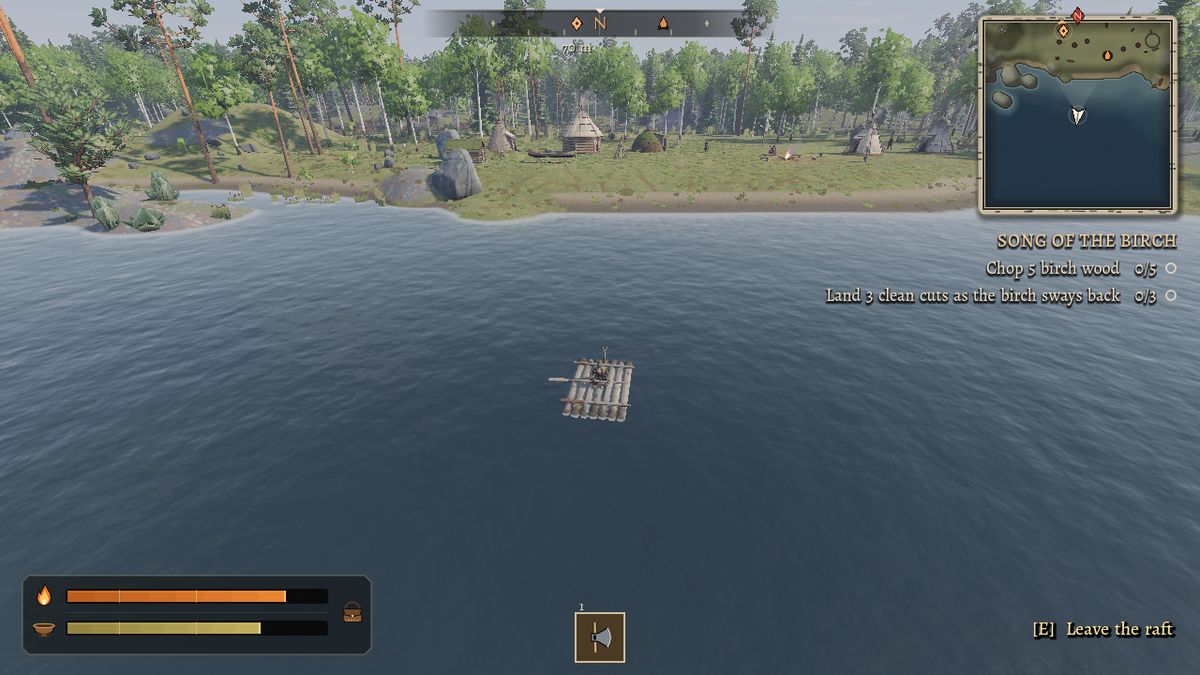
  • Boats, waters and fishing — build the boat shelter with Jorma, then a raft, a dugout and a boat of your own; new brooks and a bigger Whispering Lake; bait, depth and the boat decide what bites.
  • Hunting and the wild — wild boar and roe deer; every animal gives meat, the pelt needs a knife; the bow is learnt at the Kylä and better arrows come from Heimo.
  • A finished farm and a living village — the Hakamaa farm in the west with its family and their lit hearth; villagers work all day, eat, finish half-built things and shout danger across the shore; every line is voiced.
  • Smaller, movable pages — the side pages are slot boxes a third of the screen wide, the HUD boxes can be dragged, and carry weight is real: about 15 kg without a pack, 30 kg with the birch-bark pack.

Still rough, no need to report: faces and lip sync are not finished, and the horse's and the ox's gaits are still being tuned. Still to come: fighting from the saddle, Svea traders and imported blades.

What Was New in 0.3

0.3 opens the way north. Once the Bear-Mother has given her word, the road to the Ford is yours: a toll, a quarrel between two clans, a fight by the old custom, and a hillfort to mend. Around it the world has grown dense, alive and dangerous.

  • The Ford — the toll post with its tally pole: pay, bargain, refuse or slip past, and every choice is cut as a notch the watch remembers. The two clans' grievance grows by the day until the elders meet on the Stone Flat, and what you bring and say there counts.
  • A kin-fight by custom — when talk fails, the clans' own people fight it: Jorma, Seppä and Aino against Tervo and the Ford Watch. Talk to a leader to stand with his side, or stand aside. A lifted spear starts it, a fighter who yields is let go, the holder speaks the terms in the middle of the flat, and those who fought carry it home for a while.
  • The Ford-Fort — a hillfort on its crag: palisade, gate, ramp and a cup-marked stone, fallen in places. The mending is yours and the clans' to do, piece by piece.
  • Every clan place alive — the Lake-Kin camp, the Ford Watch yard and a new Skerry-Kin fisher camp have their own days, work, watches and night raids. Villagers have moods from what happened and talk about it, and every clan command works end to end.
  • A world worth exploring — camps, caves you can walk into, cairns, offering stones, wrecks and dens that remember you, in every zone. The Strays roam by night and may row out to the skerry. Elk and the red fox roam the woods.
  • Crafting that grows with you — new things open as you are taught them, find them or reach the right station and material; a new Handcraft skill; Heimo teaches the bow; a hide frame to cure pelts and cut leather.
  • Pages that never stop the game — your pack, skills, the clan, crafting, a quest log (L) to track and untrack quests, and a Character page (P) with what you wear and every skill as a rank with a bar, all at the side while the world goes on. On a pad, hold View and press the D-pad; hints name your pad's buttons.
  • A world with weight — boats are dry inside, bodies are solid, falls hurt and you can stumble, wind moves the trees from their roots, and the wolves and the bear are real field recordings.
  • Saunas, mushrooms and feasts — smoke saunas to walk into and build, forest mushrooms with their real properties, a barley field, the harvest talkoot, the midsummer kokko and kekri, and fishing as a reel fight.
  • Smoother on more machines — characters and textures cost less, the lower presets draw less, and quitting no longer crashes.

Known in 0.3: faces and lip sync were not finished, a few wolf sounds were stand-ins, and performance could dip on the lowest presets in the Kylä.

What Was New in 0.2.5.1

0.2.5.1 is a polish build on top of 0.25, made from what the first 0.25 testers told us: the controls get out of your way, every face is repainted, the bow is finished end to end, and the night is a real danger at the gate.

  • Run and jump from the first step — no more waiting for the first fire: Shift runs and Space jumps the moment you wake on the shore.
  • The camera on the middle mouse button — hold the middle button and drag to turn the view, in and out of a fight. The right button stays the block and lowers the bow. Both can be rebound in Settings.
  • Graphics picked for your machine — on a first launch the game chooses its graphics preset from your graphics card, tells you once, and steps down one level if the first minute runs slow. Change any graphics option yourself and your choice wins.
  • An open gate at night is a danger — leave the gate open after dusk and the wild can walk in; by day an open gate still holds them. Your companions shut the gate behind them at dusk and in the night, and now keep pace with you again afterwards.
  • Mending has a cost — mending a worn piece with the hammer takes about half of what it took to build. The hearth itself can break: build it again on the same spot and your Stead is yours again.
  • All twenty faces repainted — every face is shaded from its own painting, so light falls on the nose, the brows, the lips and the chin where the painter put them, and noses are softer. Aino and the Tietäjä too.
  • Elites you can tell apart — the Grey One wears a heavy grey mane, the Honey-Paw a frosted coat with a grey muzzle, a honey stain and a torn ear, and the Soured Elder a faint sickly glow along its seams.
  • The bow, end to end — an arrow lands like any blow: the foe reacts, the arrow sticks, and wolves and Wretches turn on the shooter; the bear shrugs off a light one and charges. Arrows that stuck in a carcass come back when you butcher it.
  • The kota's door hide — the hide in the doorway is tied back higher, clear of your head on the way in and out.

Still rough, no need to report: lip sync is not finished, the Soured Elder is hard to make out at night, and the Strays' spear thrust can still look like lifting a pole. Still to come: the way to the Ford, Svea traders, a second look at the world's light, and smarter villagers.

What Was New in 0.25

0.25 is the big polish build after 0.2.1, made from what testers asked for: fights have weight, villagers find their way, faces look back at you, iron can be worked, the bow is in your hands, and the land remembers how you treat it.

  • Combat that has weight — block by side: hold the right mouse button and move the mouse up, down, left or right to guard that side. Your arms move from guard to guard as smoothly as a swing, and you can walk and sidestep with your guard up. Watch the wind-up to see where the blow comes from; a board shield covers all four sides. The Forest-Strays take turns instead of piling in, feint, thrust with spears, stab with knives and bring clubs down overhead. The wolf's attack is a real leap, and three elites stalk the wild: the Grey One and its pack, the Honey-Paw and the Soured Elder.
  • The bow, aimed like Mount & Blade — craft a bow, arrows (blunt ones keep the pelt) and a birch quiver. Hold left mouse to draw: the view moves in over your shoulder, a ring closes as you steady, and the arrow lands where the ring points, drop and all. The string follows your hand, the arrow you see on the bow is the one that flies, and right mouse lowers it. Arrows stick where they hit and can be picked up again.
  • Iron, smithing and verses — find bog iron by the oily sheen on the water in the Suomaa (bed ore, in late summer) or by a small stone cairn on the shore (lake ore, by the Lake-Kin's leave or through Kaisla's trade). Burn charcoal and smelt bars at Seppä's furnace, then work the hearth yourself in four steps, or let Seppä do it. Make an iron spear, an iron axe, an iron-studded coat and an iron cap: your timing sets the quality, and your maker's mark goes on the piece. Bring the Tietäjä a lump of ore and he sings you your first verse, to sing into a finished piece for a small edge. Better materials make gear a little stronger; skill never does.
  • Villagers and companions who do not get stuck — helpers walk at natural speeds, queue at the gate, give way and keep right. Strays at a fence look for an open gate or a gap, and strike a sealed gate until it falls, unless a guard and a fire hold them off. The boat's rower reaches her seat, and the G wheel names the chore each helper takes.
  • Faces and hands — a dozen more characters, among them Halla and the newcomers' boy, have rebuilt faces with a real nose, brows and lips, and hands that no longer point out sideways.
  • The bone knife and the stone axe — the bone knife is made by hand and butchers quicker; the slate-headed stone axe is the humble first tool, and the iron axe chops faster than the sung axe.
  • The land's harmony and taking the last — a small readout and a layer on the map show how the land you stand in feels, in words and a seven-step bar, never a score. Wrongs weigh on it, amends and good deeds lift it, and the three regions share one song. Hold E at a berry patch, a fishing water or a nest to take the last share, and the land pays for it. Strike a friend, or someone you greeted in peace, and it is a wrong that must be mended.
  • The Outer Skerry, the cut nets and the lookouts — Jorma sets outer nets in spring and autumn; one morning they are found cut, and The Outer Nets begins. Climb a ridge, a pine or the Skerry cairn and the fog lifts; places you have only heard of show on the map until you find them.
  • The Stead chest — build it from the 10th entry of the build menu (arrow keys or Tab to reach it), press E, and stow your goods. They survive your death.
  • Voices — over a hundred new spoken lines for the land, the hearth, the elites, the Lake-Kin and the helpers, and recorded thunder for the storms.
  • Fixes from your feedback — the pickaxe sounds like iron on stone and strikes at a working pace, the cold shiver is gentler, the pines of the Outer Skerry can be felled, Jorma puts his own oar away while he rows, and grass pops in less.

Still rough, no need to report: faces and lip sync are better but not finished, the Strays' spear thrust can still look like lifting a pole, the elite beasts are hard to make out at night, and a few of the newest lines are still being recorded. Still to come, and not in 0.25: the way to the Ford, Svea traders and imported blades, a second look at the world's light, and smarter villagers.

What Was New in 0.2.1

0.2.1 takes your feedback on 0.2 and polishes the journey from the first fire out into the open world: the way to the second clan, life between the villages, the weight of a fight, and a screen you can keep as clean as you like.

  • Your save carries over — saves from 0.1 and 0.2 continue in 0.2.1, with a backup of the old one; New Journey on the title screen now truly starts fresh.
  • The way to the Lake-Kin — when the clan's story so far ends, the toll-watch is named at once, the compass points west, and old blazed pines lead you to the river path. The edges of the world are real: walk, swim, raft or row to one and you are told why you cannot go on.
  • A trader between the villages — every second day outside winter Kaisla of the Lake-Kin comes down the river path, trades by the Kylä's fire until early afternoon, and walks home.
  • The clan has a day — they work with the tool in hand, eat together at the fire and sleep in their kotas at night. Asking for help (G) works for every job, and when someone cannot help, they say why and what to do.
  • Weight in a fight — hold the right mouse button in a fight (or LB on a pad; on a pad, run is now a click of the left stick) to block, with a weapon or a shield; a blocked Stray reels, a heavy blow can break a weapon guard, and a heavy hit that lands mid-swing rocks you. Struck Forest-Strays grunt and cry out, a helper's club thuds, and the wolves at the rack now press the yard.
  • Crafting and building that flow — every felled birch gives its bark, the craft panel makes five or all you can at once, one hand-over gives every open span of a fence line what you carry, and mending wears your hammer until you make a new one.
  • A screen you choose — Esc › Settings › Interface: show or hide each part of the HUD, pick Full or Minimal, set the HUD size; HUD text stays readable on snow.
  • New faces and real sounds — Halla, the Lake-Kin elder Tervo, the trader Kaisla and the child who comes down the river have their own bodies; the shore, the lake, the wind, the campfires and the night owls (huuhkaja and lehtopöllö) are real recordings now.
  • More out there, and faster — the river country has its own wolves, storms reach you away from home, something usually happens in your first hour of open play, the Kylä loads faster, and coming home from the Outer Skerry or the river is much quicker.
  • Take the oars yourself — in the vene choose Take the oars (E): W / S row, A / D turn, Shift pulls hard; Ask everyone ashore or Jump out when you land. Nobody is left sitting in a boat or set down in deep water, boats no longer row over land, the quest list wraps at the right, and rowing, swings, turns and landings move more cleanly.

What Was New in 0.2

Demo 0.2 carries the journey past the first chapters and out into an open world, with two new places beyond the Kylä shore and a second clan to meet.

  • The world opens after the prologue — the clan's story goes on whenever you want it; go exploring first, and Things to Do under the story quest always has a next step.
  • The story to its first ending — a new chapter with Halla: Stolen Nets, Smoke in the North-West, The Camp and An Exile's Word, through to the end card: the story so far ends here, the world goes on.
  • The Outer Skerry — row there with Jorma, or paddle your raft into the fog bank south-west of the Kylä: mend the old net-hut into a storm shelter with a fire, watch the grey seals, take gull eggs in spring, gather driftwood, set the net line.
  • The Lake-Kin at Tally-Bend — walk the river path from the Kylä's west edge to the Lower Ford River, where a Lake-Kin family and their dogs keep a toll-watch. They are wary of Skerry-Kin at first: guest right gives you their fire and fair trade, and trust brings more.
  • The turning year — days of about 72 minutes, seasons that turn every six days, and rest and sleep to see the dark through.
  • A living world — two or three chance meetings in an hour and a half, one at a time: a trader, a hurt traveller, Strays at night, a child lost at dusk, a storm — while the clan goes about its own day at the Kylä.
  • Three new events — Followed at Dusk: a lone wolf on your trail until a torch or a fire turns it; Washed Ashore: a wreck with salvage after a storm; Down the River: newcomers who left a lake that could not feed them all.
  • Forest-Stray camps — they appear in the wilds after about half an hour of play: watch for their smoke. A Stray who yields can be spared.
  • Fixes from your feedback — any rock or boulder now gives stone to a pick, Jorma has a new voice, and the whole journey from a new game to the end card is played through by an automated test.
  • Gamepad, Linux and macOS — menus by pad, pad buttons in every prompt, LT / RT for the hotbar; and the first experimental test builds for Linux (64-bit) and macOS (Apple silicon and Intel).
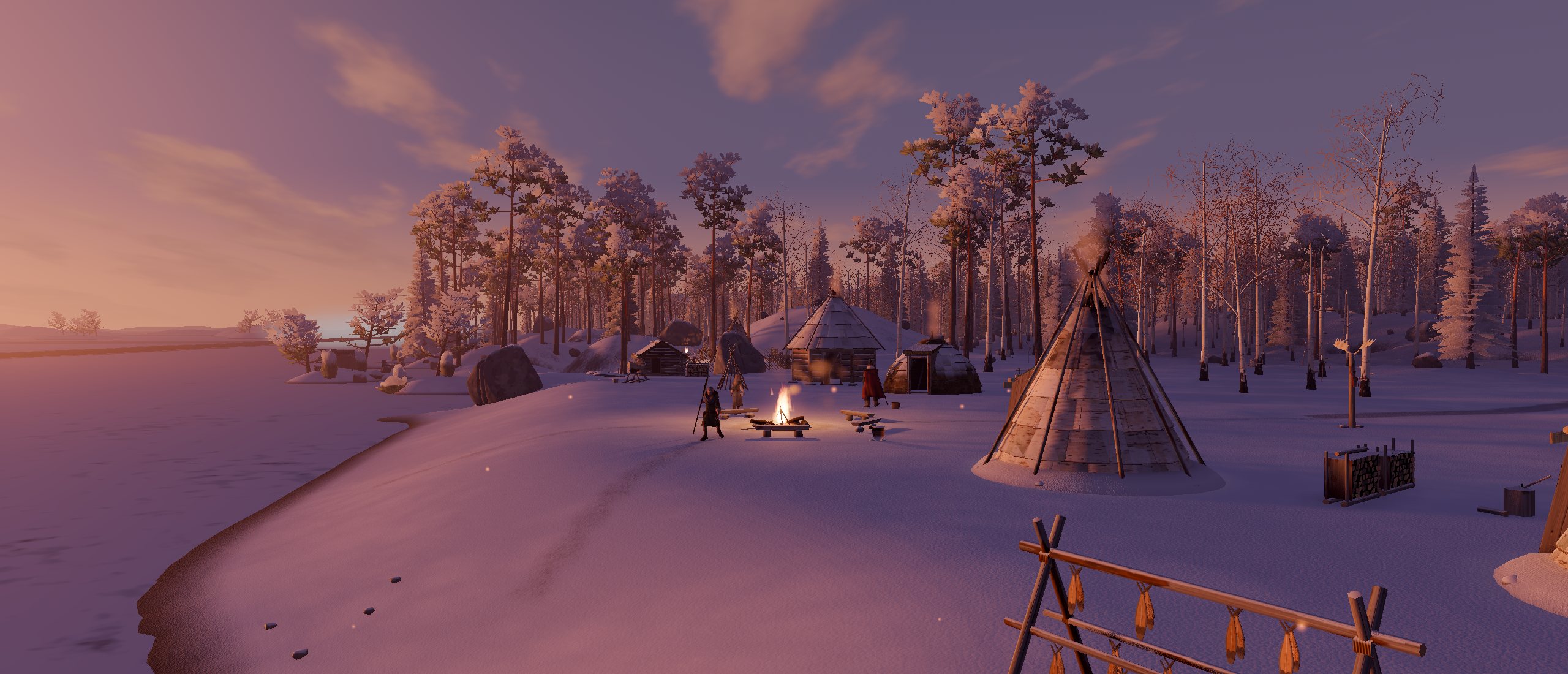
The Kylä in winter: snow on the kotas and the shore, a fire burning, the low sun of a short day
The Kylä in winterThe low sun of a short day
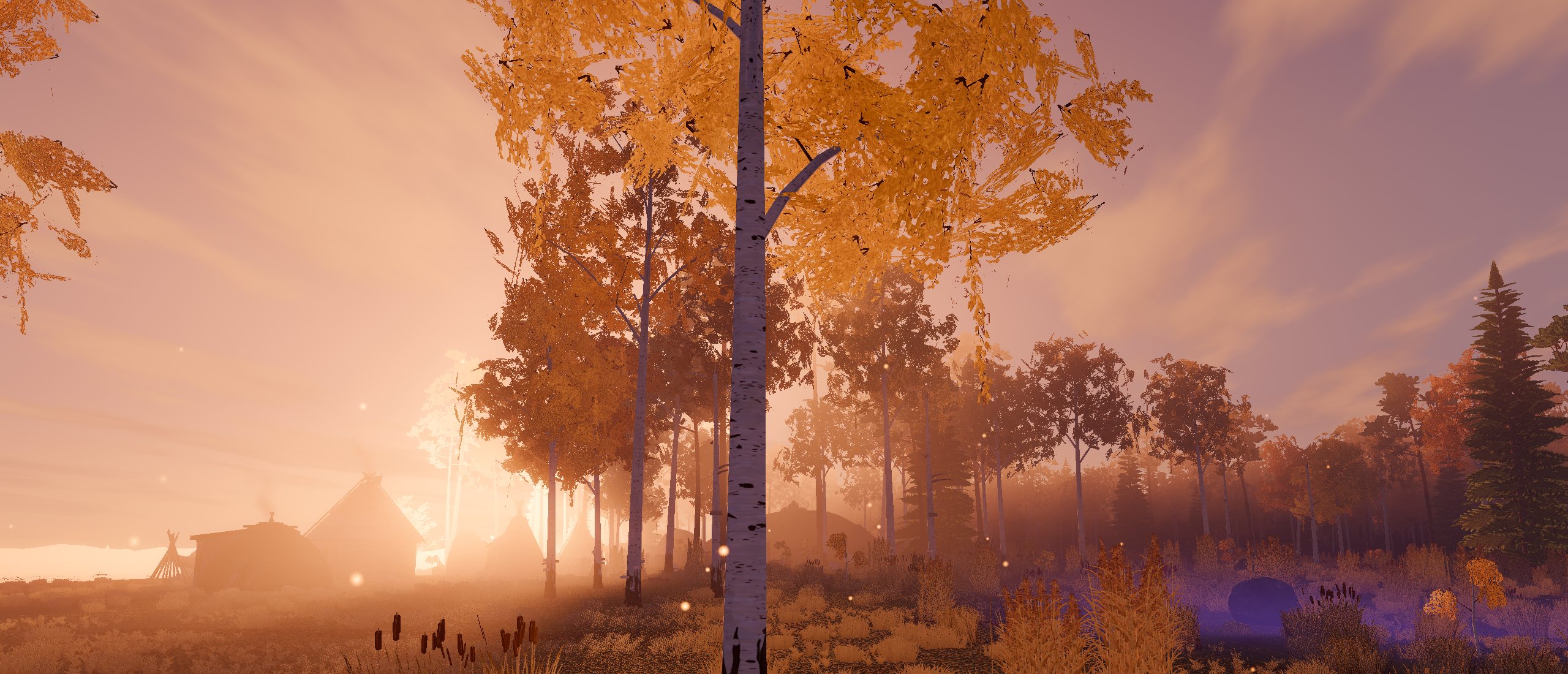
Birch woods in ruska, the evening sun blazing through golden leaves
The birch woods in ruskaThe evening sun through the leaves
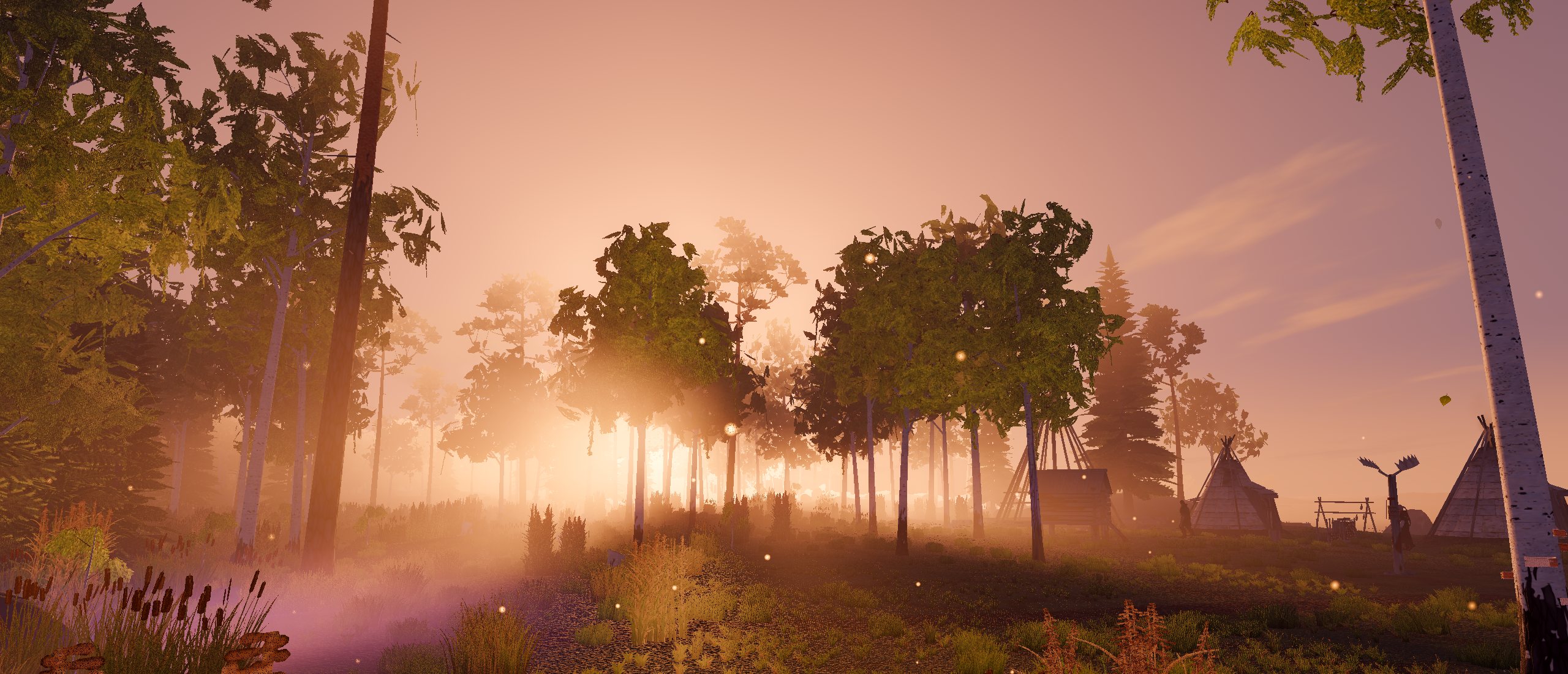
Spring first light: sun rays and mist through the birches at the Kylä edge
The Kylä edge in springFirst light through the birches
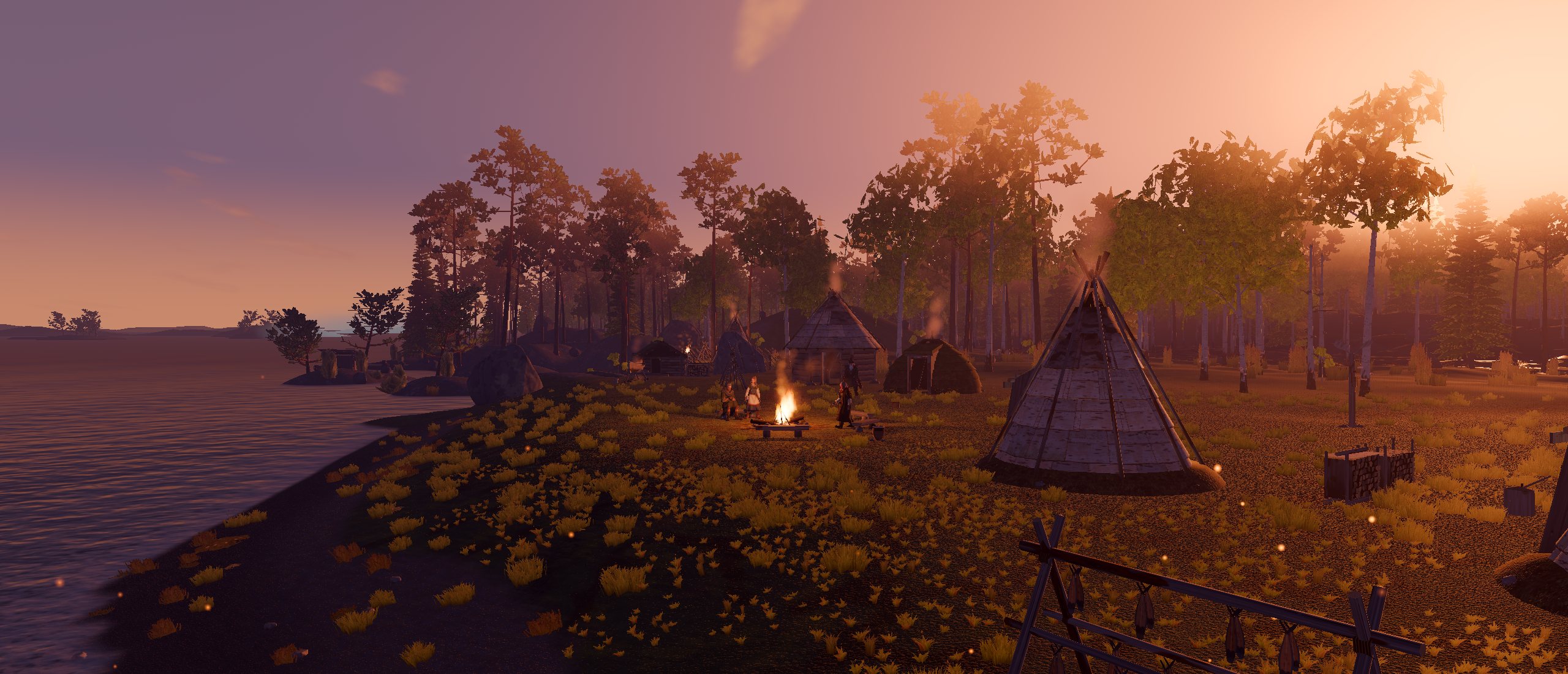
A midsummer sunset over the Kylä shore, the kotas and the fire by the water
The Kylä shoreA midsummer sunset
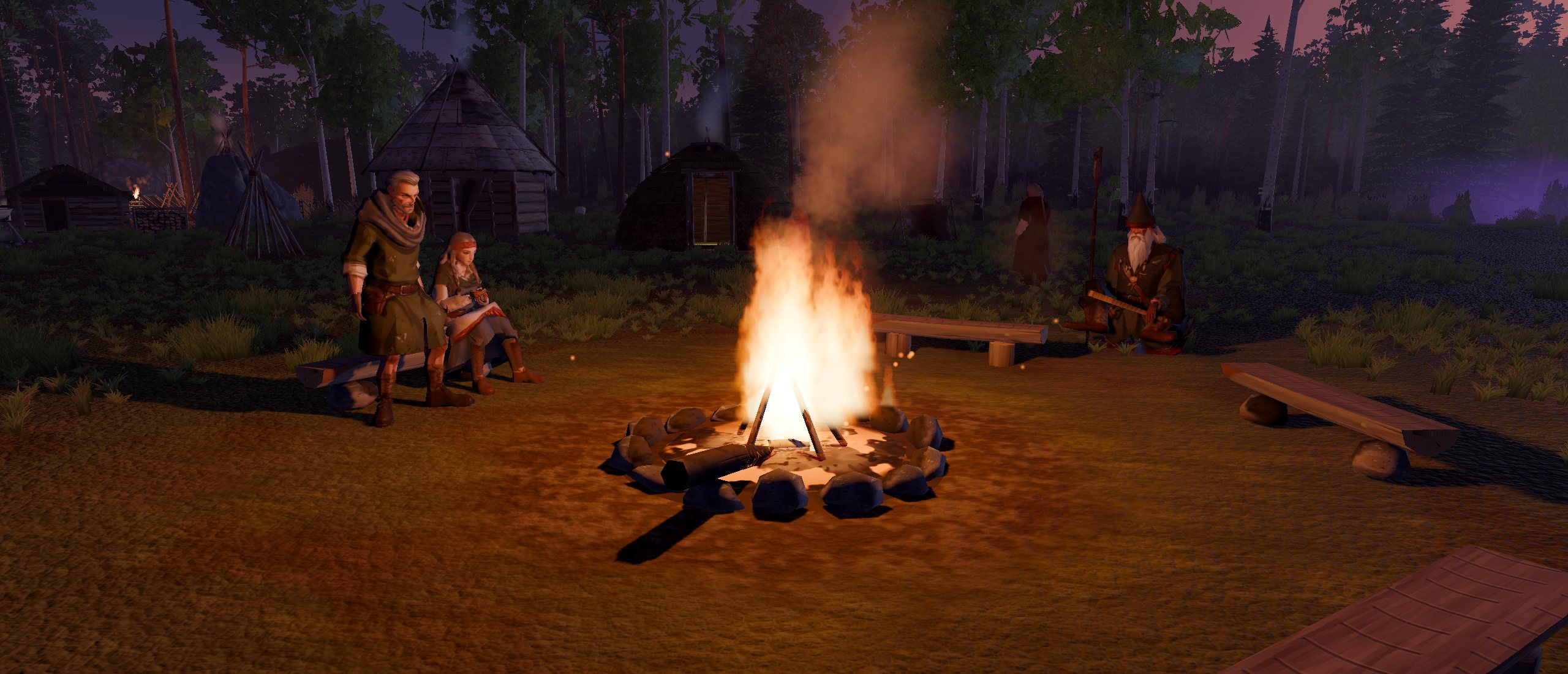
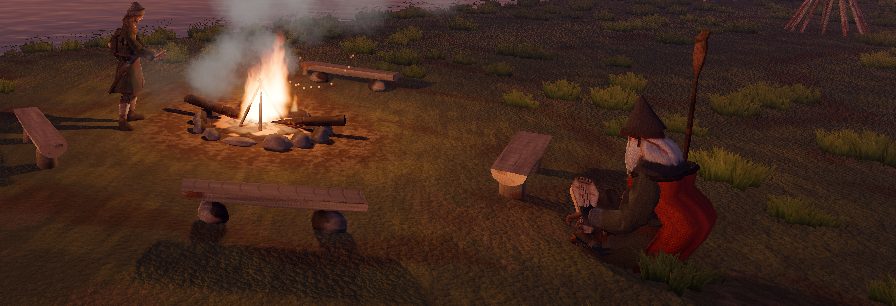
The clan fire on a summer night, the folk seated around it
The clan fireA summer night among the folk

Straight from the living build

The Deep North, as it looks today

The Saga Begins

Watch the Prologue

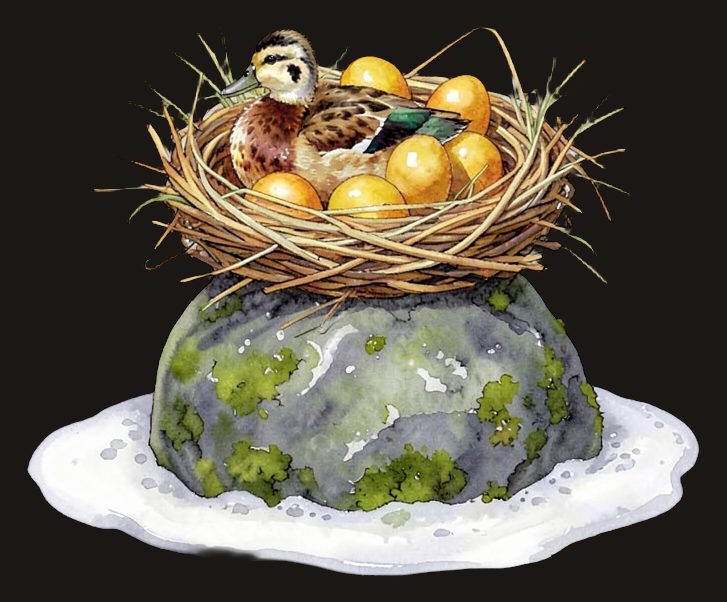
The prologue of Home & Horizon is deeply inspired by the Kalevala, the Finnish folk epic. From Ilmatar's first song on the primal waves to a cold ember beside a silent clan fire — this is how the world unfolds. A teal nests on a knee; six golden eggs become the world; and a Song-Seeker wakes on the shore of Kalevala with one duty: carry the fire's warmth out with you. It will not last.

The opening as it plays today, two minutes from the first plate to the keeper standing up — recorded straight from the game, plates and world alike. Sound on.

The Vision

The Tension Between Hearth & Horizon

At its essence, Home & Horizon: The Deep North is a Nordic survival saga where three Iron Age peoples each fight to keep their own hearth lit, their tribe prospering and their world in harmony — while a cracked cosmic mill poisons the North, and the fighting itself feeds the rot and the dissonance of the cosmos. You are a Song-Seeker, one among many, mending what you can reach, building your own faith while sharing it with all living beings (yes, that is a cliff-hanger — you will understand it in the later stages of the game).

“Make the Home so warm, textured and grounded that the Horizon feels terrifyingly vast — and full of opportunity. That tension, the balance between base building and exploration, is our entire design. No single strategy or tactic is enough.”
The Design Thesis

ISongs, not spells

There are no fireballs here. Magic is väki — the power that lives in iron, birch, bone and water. You craft by singing a thing's Origin to a heartbeat rhythm; a pure song makes a sharper blade, and every masterwork carries its maker's signature carved into the grain. The same philosophy applies to everyone who contributes to the game, in art, design or anything else: we want their contribution to be visible and heard in the game's DNA.

IIThe Hearth is a battery

Warmth and hunger are real clocks, tuned for 15–20 minute journeys. A fed, protected stead stores the strength you need to range further — cook, build, raise your comfort, and let the fire push back the night. The home is not a menu. It is the engine of the expedition, if you want to travel afar.

IIIThree peoples, one wound

No faction can stand alone: iron, grain and salt all cross the same storm-sea. Selfish play raises the world's fracture — the sea darkens, storms rise, the sun pales, things wake in the deep. Cooperation is not kindness here. It is part of the survival mathematics.

Watercolor of a teal nesting on a knee of stone, guarding golden eggs — from the game's prologue plates
Grounded form Architecture and tools drawn from the archaeological record. No Hollywood Vikings, no horned helmets. The game's mythical and spiritual influences come directly from Nordic and Scandinavian folklore.
Painterly surface Painterly, brush-stroked materials over true lighting — story carried in the grain of wood and the moss on stone.
Mythic light The myth lives in fog, volumetric rays and atmosphere — one fantastical detail per scene, and everything else true. That is mythical realism.
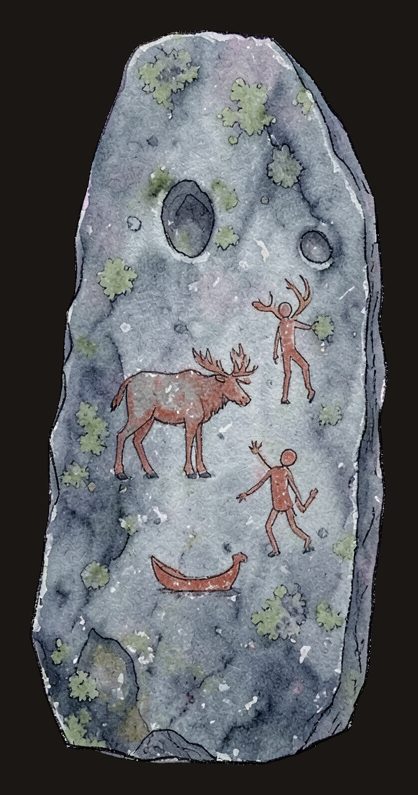
Watercolor standing stone with rock-art figures — elk, people, a boat — from the game's prologue plates

The World

Three Continents, One Cracked Song

The Sampo — the abundance-mill that kept the world in harmony — has cracked, and its three rings carry the runes of three peoples. Only by bringing together the wisest of each people can they mend it. Until then, the Black Winter's rot bleeds through lake, field and fjord.

In-game capture: an autumn dawn at the Kylä shore camp — campfire smoke rising between the kota shelters

Kalevala

The Kalevan-Väki · Forest-Kin · Finland

Labyrinthine, ethereal, hidden. Roads are water.

A thousand lakes veiled in mist, birch-cradles and peat bogs, old taiga guarded by spirits. The Väki sing iron into being and read the world through haltija-motes in the fog; their prestige is antler and bone, their halls are cones of moss and weathered log, and their villages stand on stilts over mirror-still water.

The lakes have begun to bleed — groves turn Hiisi, an offended sacred place rotting from within — and the Väki hold the forest's last healthy heart while their neighbours hunger for it.

In the MVP — playable now Silhouette: rounded, labyrinthine
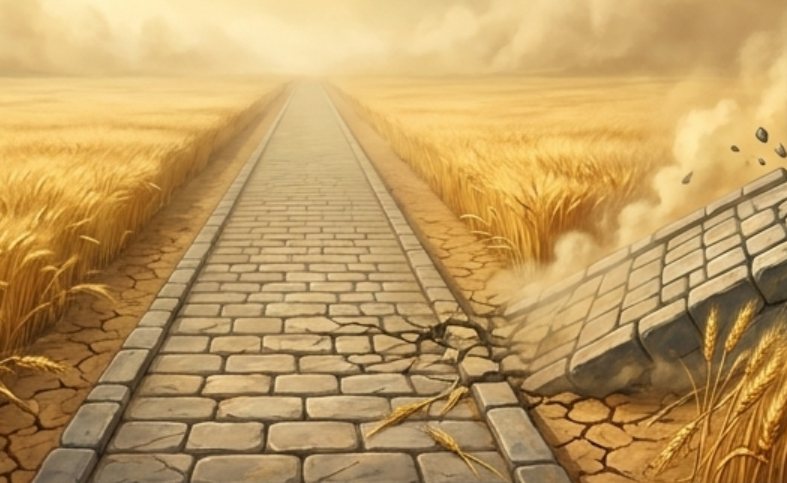
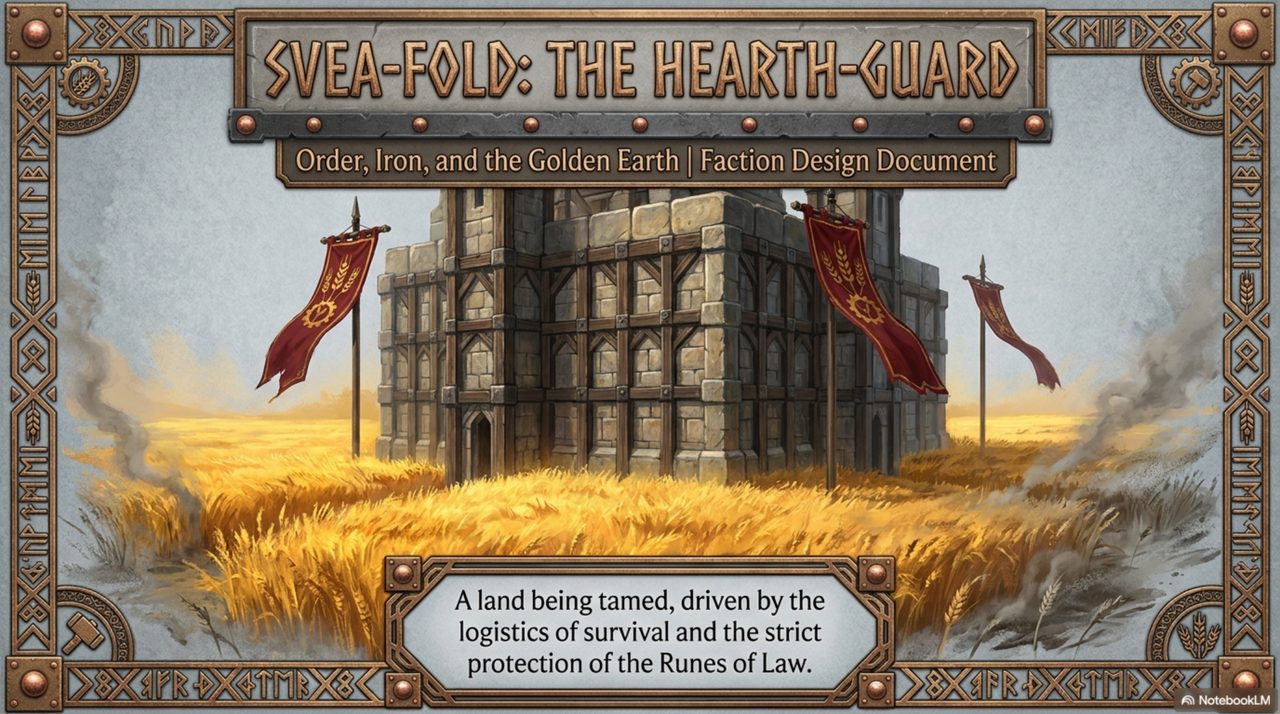
From the Svea-Fold design folio: the King's Road, a dressed-stone highway through golden wheat, cracking where it meets the wild

Svearike On the roadmap — in development

The Svea-Fold · Hearth-Guard · Sweden

Order, iron, and the golden earth — a land being tamed.

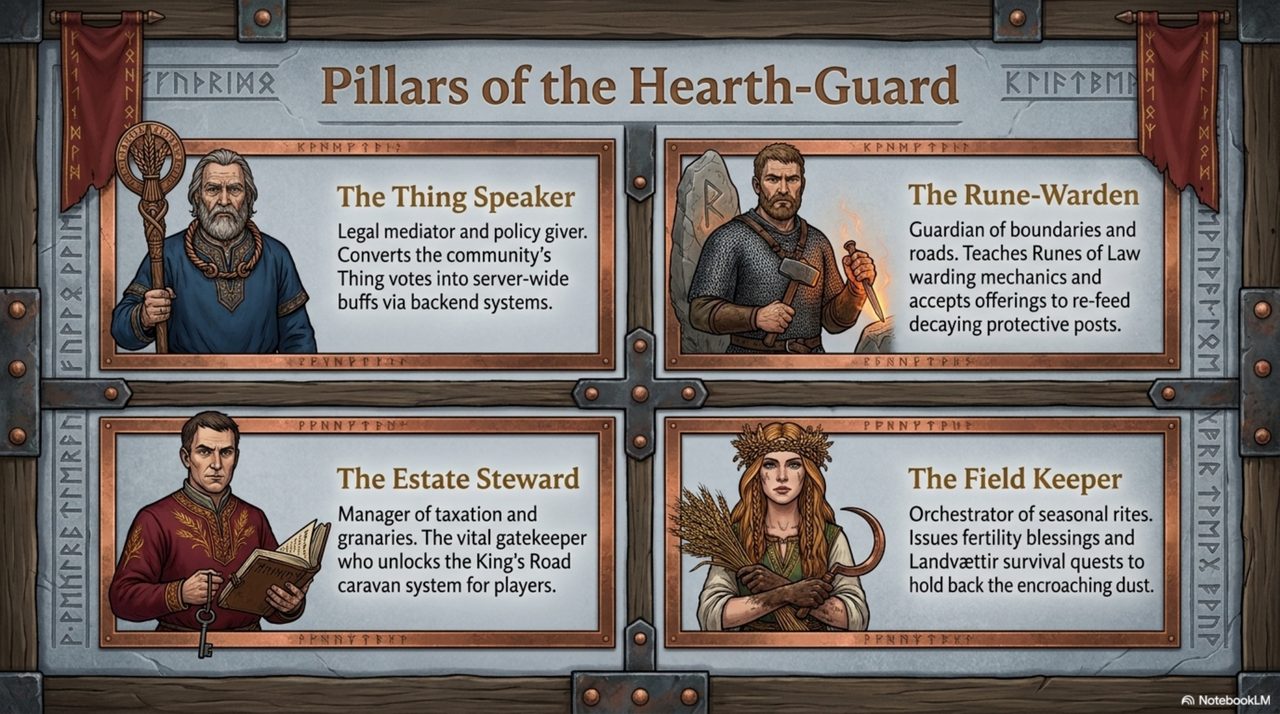
Wide wheat plains ruled from dressed-stone halls, where the Great Forges never cool and every road obeys the Runes of Law. The Svea-Fold are the world's economic engine: caravans, granaries, sea-forts and the Thing, where law is made by consent and votes become blessings.

But their land-spirits are fleeing. The golden plains parch into turning dust, and only Kalevala's pristine waters can save their cattle — at any cost. They conquer because they must.

On the roadmap Silhouette: symmetrical rectangles
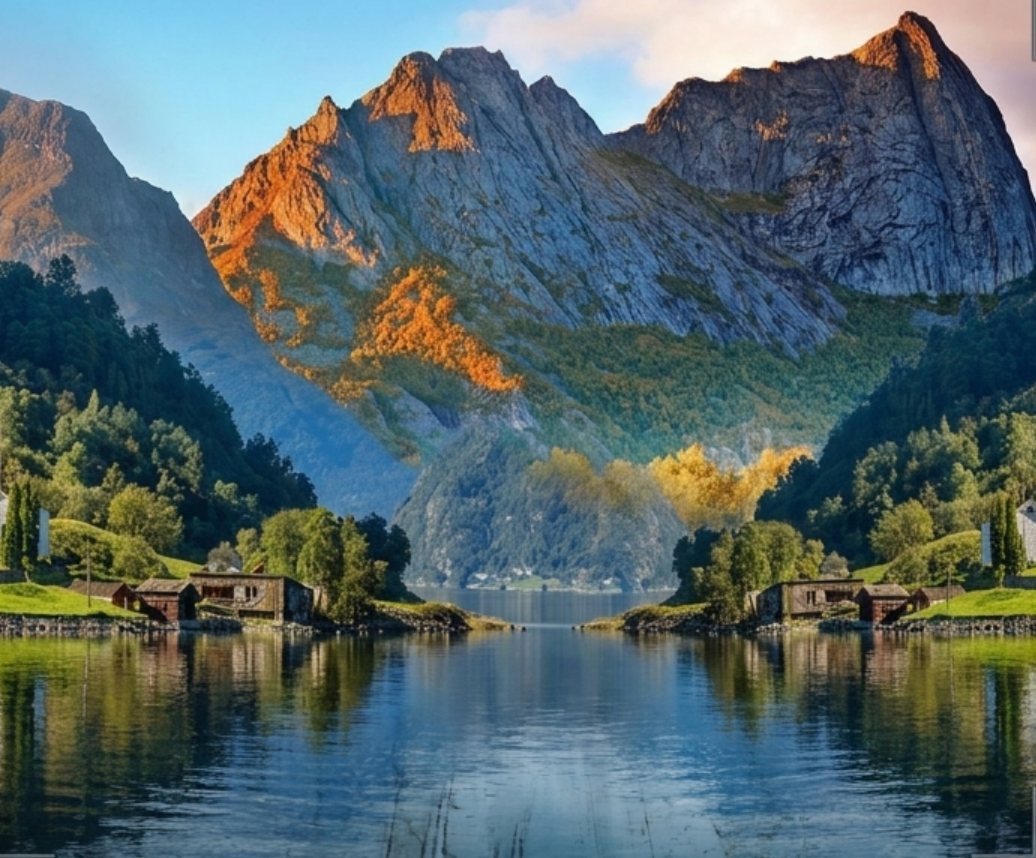
From the Nordvegr design folio: a fjord at dawn beneath towering cliffs, turf-roofed halls at the water

Nordvegr On the roadmap — in development

The Sea-Kings · Norway

Salt, verticality, and desperation. The ocean is not a barrier — it is a highway.

Cliff-shards and black fjords under a thin, storm-grey light, where tarred stave-halls hang over the surf and dragon-headed prow-posts shed the snow. The Nordmenn are the master shipwrights of the North: they read storms as omens, measure worth in oaths kept, and flank the world's trade through the Arctic breach.

Their fjords freeze in midsummer as the Pale Sun weakens — and they need Kalevala's World-Tree timber to keep their ships, and their way of life, afloat.

On the roadmap Silhouette: vertical shards, cliff-hung

Between them lies Austmarr, the storm-sea every trade must cross — and in its Eye, half-sunk, the cracked Sampo waits for three peoples to stop feeding the storm and start mending the song.

The cracked Sampo, singing its discordant song, is the source of chaos across the whole universe of the game: the more its dissonance is fed by wrongdoing, the more destruction and despair all living beings will witness.

The Road

First, Kalevala Whole

The MVP is not a slice of everything — it is one continent made complete: a full survival home in the Finnish lakeland, played in 15–20 minute sessions, offline-first, built for PC and designed from the first triangle to carry over to console and mobile. Then the world grows, ring by ring.

  • The prologue, playable end to end — wake beside the dead clan fire, kindle it by heartbeat, meet the Tietäjä, sing your first axe into being, face the Hiisi-Wretch, and see the smoke on the horizon. Built and gated in the live build.
  • A true survival loop — warmth and hunger as real clocks; any lit hearth is refuge; collapse means waking at your own fire, poorer but alive.
  • Song-of-Origin crafting — tools sung at the hearth to a heartbeat rhythm, quality rising with your song, every masterwork signed in runes.
  • A stead of your own — place your hearth, raise kota and drying racks, grow Comfort into Saga Buffs that carry you further.
  • Five roaming bands — from the safe Kylä shore through flint rocks, bog-iron marshes with virvatuli lights, and birch woods, into Tapiola's deep taiga.
  • The Kylä clan — the Bear-Mother, Seppä the smith, Jorma the water-watcher and more, each with quests, daily work and trade.
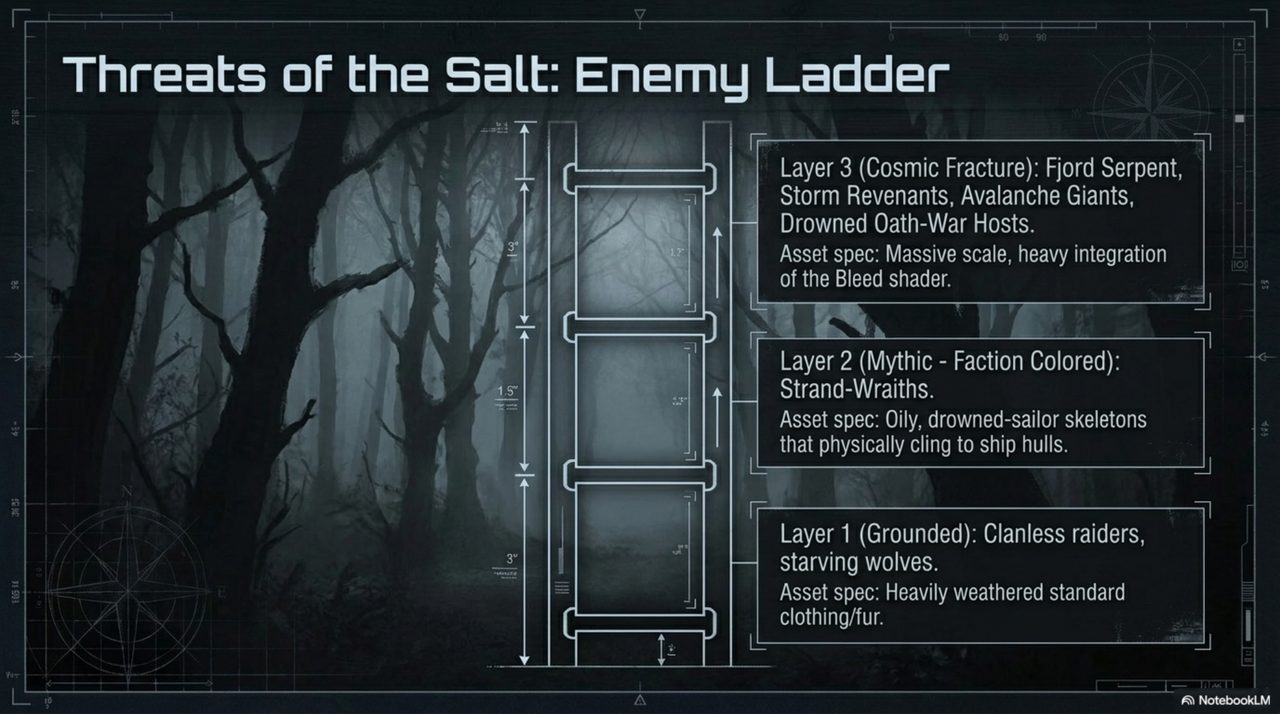
  • Grounded threats, then myth — wolves at dusk, boars, poachers — and the Hiisi-Wretch, where the Bleed shows its face.
  • PC first, cross-platform by design — built and tuned on PC, with console and mobile presets that keep the same gameplay; offline-first, so solo play never needs a network call.

MVP-0 — The Prologue Built

The first 15–20 minutes at the Kylä shore camp: the four quests of the opening, the rhythm of the Song, the Hiisi birch and the burning longship on the horizon — verified end to end by an automated playthrough gate.

MVP-1 — Finland, Complete Now

The full single-player Kalevala: the survival loop, gathering and song-crafting, stead-building, the clan, the five roaming bands, the Hiisi night finale. Fun three sessions in a row. Its first stretch is out now for testing as the single-player demo 0.3, with an open world after the prologue, the Outer Skerry, the Lake-Kin, the way north to the Ford, iron and the bow.

MVP-2 — Co-op on the Lake Next

2–6 players share Finland: accounts and cloud saves, shared Steads, one world-encounter seed per day so everyone meets the same wolf pack. Roles emerge — crafter, explorer, trader, leader.

MVP-3 — Nordvegr & the Austmarr Crossing Later

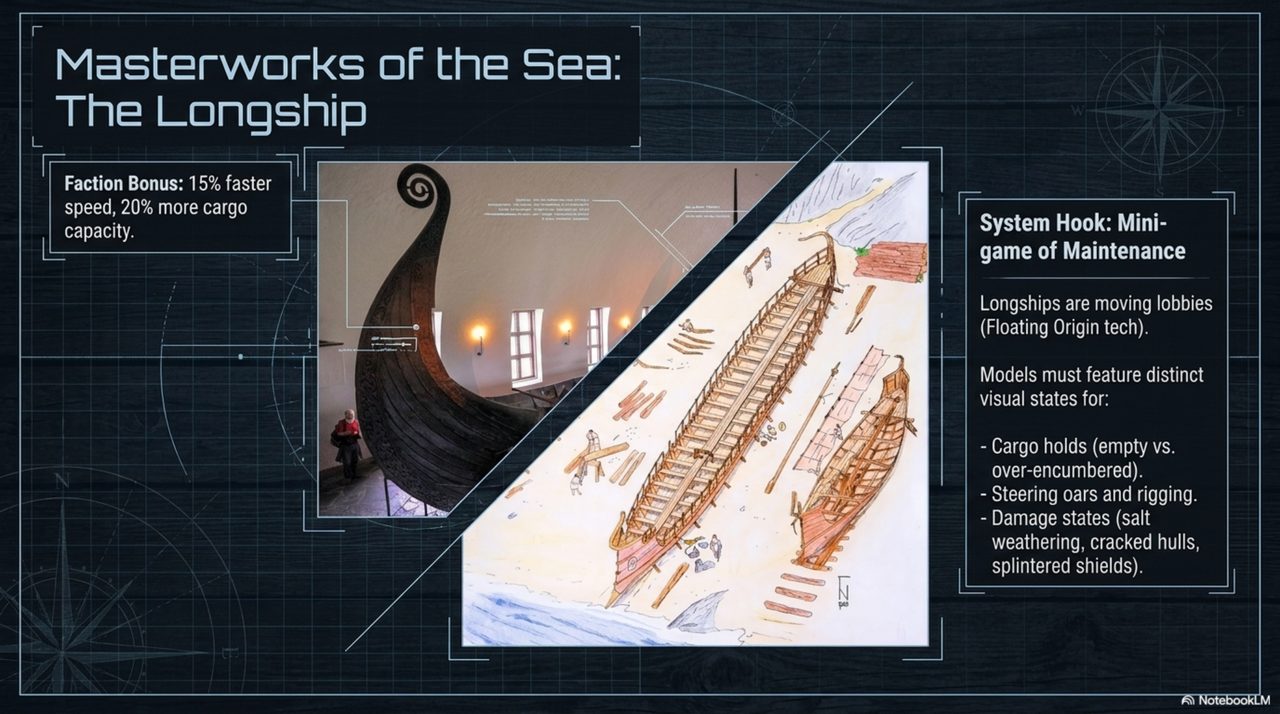
The second continent and the storm-sea: longships that carry players and cargo on the Storm Seer's windows, first cross-faction trade at a neutral island, and the World Fracture made visible — the storm turns violet.

MVP-4 — Three Peoples, One Saga Server The Vision

Svearike joins the North: caravans and sea-fort tolls, Thing votes and raid windows, the great bosses waking at fracture thresholds — and the cooperative season finale: a joint voyage to the Eye-of-Discord to mend the Sampo together.

Beyond Kalevala

Finland Is Where It Starts

The MVP is one continent made whole: exploration, a first test of PvE and PvP features, crafting, building, real-world dynamics and the basics of diplomacy, sea travel, and the “world harmony” concept. The destination is the whole North: an open-world online survival saga where Kalevala, Svearike and Nordvegr share one world, one storm-sea and one cracked Sampo — and where what each people does to the land is felt by all the others. A few things waiting further up the road:

IDiplomacy between peoples

Trade, truce or raid. Thing votes turn a people's will into law and blessings; border brokers carry fur, salt, iron and rumour between the three. When the World Fracture climbs, rivals face a choice: coordinate their trade and their strikes, or watch the Bleed eat everyone's harvest.

IICollaboration that matters

Longships that need a crew to row, defend the cargo and read the storm. Caravans on the King's Road, shared steads, joint strikes against what wakes in the deep. Ship speed and safety scale with how well people work together — cooperation is not a toggle, it is how the North survives.

IIIOne root of faith, three tongues

Beneath three cultures lies one root: the First Song that wove the world and the Sampo that kept it in tune. The Väki call the rot Hiisi, the Svear the Song of Discord, the Nordmenn wyrd gone wrong — three names for one wound, and one rite that can mend it: the Tietäjä, the Thing Speaker and the Storm Seer, singing together at the Eye-of-Discord.

IVThe whole North, online

Three continents with the Austmarr between them, seasons that turn for everyone at once, a living saga server whose world remembers. And when you want the quiet, the hearth is still yours: solo play stays offline-first, all the way.

VA server for every kind of saga

The North will run on different types of servers, so every player finds their own way to play: the core Saga experience, personal servers with co-op options, hardcore survival, single-continent worlds and more.

In Play Now

What You Can Already Do

Not concept art: these systems run in the build today, at the Kylä shore. Captures keep the in-game interface, because the interface is part of the story.

In-game build radial: log raft, birch-bark kota, log bench, pole fence, workbench, watch fire, fish-drying rack
A finished birch-bark kota, its builder beside it

Build with the hammer

Choose a piece from the build radial — log bench, workbench, watch fire, pole fence, fish-drying rack, birch-bark kota, log raft — set its ghost where it fits the ground, carry the wood, and raise it stage by stage: poles, bark, finished. Every piece is a real object with weight and a purpose at the hearth.

In-game clan help wheel: help build, fetch, cook, gather, keep watch, carry goods, come with me
Three of the clan raising a birch-bark kota's pole frame together

Command the clan: talkoot

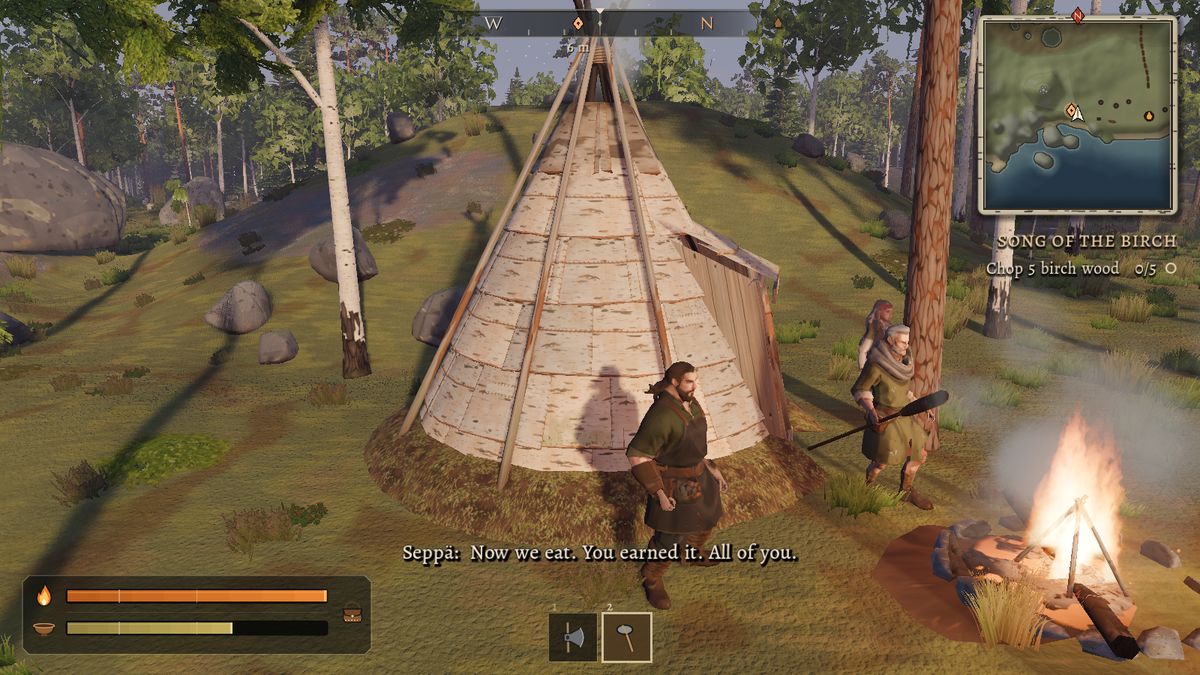
You do not survive alone. Ask the clan for help from a radial — help build, fetch from the stores, gather, cook — and watch them take it up: Seppä carries timber from the stores, Aino lashes the poles, and three pairs of hands raise a kota faster than one. When it stands, everyone eats. Talkoot, the old Finnish word for shared work, is a mechanic here.

A log raft out on the open lake, the shore camp behind
The clan gathered by the finished kota and the fire for a shared meal

Lake, sea and the long table

Lash a log raft, push off and paddle — past the skerries the swell runs high and grey, and Ahti's current turns you back toward shore. Come home to a warm kota and a shared meal: the hearth is where strength for the next trip is stored.

Fights with sides, and the bow Live in 0.3

Swing from the right, from the left or overhead, or drive in a thrust; guard the side the blow comes from, dodge in eight directions, kick, fight bare-fisted, take the blow on your shield. Forest-Strays take turns and feint; wolves leap. Draw the bow over your shoulder and the arrow flies where the ring closes. Physical bodies that flinch and stagger, weight in every hit, restraint in the camera — closer to a struggle than a dance. See it in the combat clip at the top of the page.

The Makers & Designers

Elja Placido

CTO & Founder

Fifteen years in technology — a lifetime in games. By day a Senior Data & AI Architect at Aitomation: a solution architect, systems thinker and creative innovator who has built and led high-tech organisations and projects from startups and NGOs to global corporations and EU sustainability programmes, across AI and agentic systems, data platforms and cloud architectures.

Author of the debut book Beyond Survival, with Rational Agent in the making, and an R&D lead on AI, sustainability and the regenerative transition at CISUREGEN. Above all a lifelong player of RPGs, survival, strategy, MMO and open-world games, with a musical ear and a drawing hand: systems built by an architect, felt by a player, heard and seen by an artist.

“There have never been enough games rooted in the Finnish Iron Age — in the Kalevala's mythic identity and the folklore my own roots grow from. Home & Horizon is the game I have wanted to exist for as long as I can remember. Its success is personal.”

Riku Kivilinna

Creative & Sound Production

Producer, composer and mixing engineer behind Hitstash Music in Helsinki. Since 2012 Riku has produced records for artists across many genres and composed music for theatre, film and other media: music and audiovisual production from the first idea to the final master.

A veteran gamer of RPGs, strategy and open worlds, the very genres this North grows from, Riku works on the creative and sound production of Home & Horizon, and will also take part in the technical production of the game's design and its world.

Paulus Mikkola

Game Design Advisor

A multi-talent and innovator whose skills span business, team leadership, project management, software development in many programming languages, gamification, serious game design, database architecture, UX/UI and large language models.

His particular interest is understanding nature as living ecosystems and drawing wisdom from them for everyday life. Paulus brings his unique experience of entrepreneurship, software development, gamification and systems thinking to our lore, game mechanics and world design.

Alex Dadaev

Art & Visual Design Advisor

Creative Producer at Rovio, formerly at Wargaming and Azur Games, with more than ten years in mobile games, specialising in performance marketing and scalable creative production systems. He has built creative pipelines from zero to scale, led cross-functional teams of 10–20+ people and driven measurable uplift in user-acquisition performance.

A battle-tested gaming industry veteran, Alex brings his unique and authentic hand-drawn touch to the game's art and creative vision.

The team is in discussions with top-notch 3D artists, game developers, sound designers, potential testers and makers of Nordic and Scandinavian traditional culture who want to contribute to the game. More names behind the design and development of the game will be announced in the near future.

Join the Journey

Warm Hands Wanted

This world is being built in the open, one honest session at a time — and it needs people who love the North as much as its maker does.

Testers & followers

The feedback channels on Discord and Telegram are open — the hearth-fire of the community, and the Discord is newly rebuilt: come and see, even if you joined before. Play the single-player demo 0.45 (free on itch.io), follow development from day one, see the world grow in weekly captures, and tell us what sings and what falls flat. Every tester is welcome; early feedback shapes the North more than any plan.

Discord Telegram

Nordic & Scandinavian artists

An open call to culture markets, museums, musicians, sculptors and craftspeople: help us give this world its true objects, sounds and faces. This is not a history project — it is mythical realism, and it deserves the real North's imagination.

Want to take part, or ask first? Write to digicisu@gmail.com.

Get in touch Read the open call